CoursesFirst Year Seminar: Medieval Worlds
English 0300

First Year Seminar: Medieval Worlds

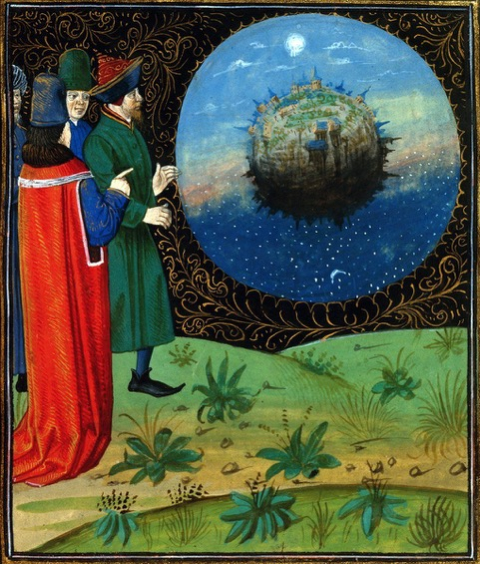
We pride ourselves on thinking globally and having at our fingertips information about people, places, and times. How did people before c.1500 imagine the whole world? What did it mean for them to think big?

Tuesdays and Thursdays, 1:45 PM – 3:15 PM

In this course we read a variety of medieval and early authors who try to take into account the whole world – even though they couldn’t circumnavigate it. We will trace the geographical imaginations and cultural encounters of early writers across different literary genres, from maps, to travel narratives, such as Marco Polo’s account of his travels to China and India and Ibn Battuta’s descriptions of the Arabian Peninsula and West Africa; to monstrous encyclopedias and bestiaries, universal chronicles and chivalric romances. We will also explore different medieval systems of thinking big, such as social hierarchies, genealogies, bibliographies, and natural histories. Assignments will include short weekly responses, an oral presentation, a digital exhibit, and a final research project. Our seminar will take place in Penn’s rare books and manuscripts, where we will learn to handle medieval books, some over 1000 years old.
Related Content

Other Courses of Interest

HSOC 3210

Health in Philly: Past and Present

Instructor(s)

  • Andi Johnson

Semester

Fall 2025

How have different neighborhood organizations, activist groups, and private and public institutions in Philadelphia tried to understand and address shared health problems? How have Philadelphia organizations, groups, and institutions promoted wellbeing? In this course with a field work component, students will read about neighborhood- and community-based interventions into health in Philadelphia since the turn of the 20th century.


Learn More
URBS 1400 - 301

Inequity and Empowerment: Urban Financial Literacy

Instructor(s)

  • Brian Peterson

Semester

Fall 2025

This course provides students with a rich look at the historical and contemporary factors that have shaped America’s wealth gaps. By studying the economic impacts of systemic forces such as discriminatory housing, predatory lending, and unbanking, students will develop a deep financial understanding of today’s urban communities.

Learn More