
CoursesFirst Year Seminar: Medieval Worlds
English 0300

First Year Seminar: Medieval Worlds

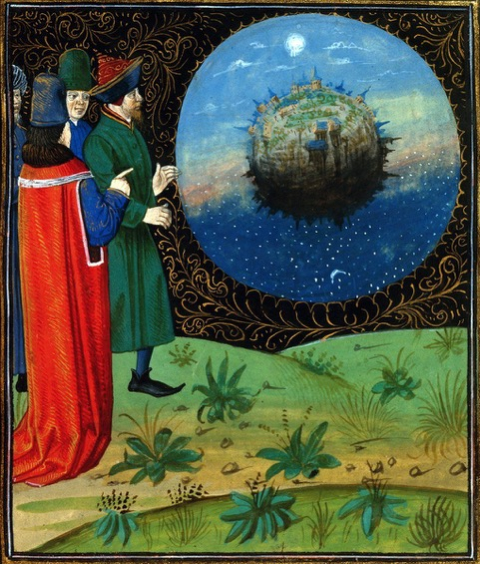
We pride ourselves on thinking globally and having at our fingertips information about people, places, and times. How did people before c.1500 imagine the whole world? What did it mean for them to think big?

Tuesdays and Thursdays, 1:45 PM – 3:15 PM

In this course we read a variety of medieval and early authors who try to take into account the whole world – even though they couldn’t circumnavigate it. We will trace the geographical imaginations and cultural encounters of early writers across different literary genres, from maps, to travel narratives, such as Marco Polo’s account of his travels to China and India and Ibn Battuta’s descriptions of the Arabian Peninsula and West Africa; to monstrous encyclopedias and bestiaries, universal chronicles and chivalric romances. We will also explore different medieval systems of thinking big, such as social hierarchies, genealogies, bibliographies, and natural histories. Assignments will include short weekly responses, an oral presentation, a digital exhibit, and a final research project. Our seminar will take place in Penn’s rare books and manuscripts, where we will learn to handle medieval books, some over 1000 years old.
Related Content

Other Courses of Interest

PPE 4900-301

Advanced Seminar in PPE: Cooperative Altruism

Instructor(s)

  • Jaron Cordero

Semester

Fall 2026

Cooperative altruism is the intention to benefit sentient beings and work together to accomplish this. Students in this interdisciplinary course will collectively explore cooperative altruism, both in theory and in practice. By engaging with a variety of approaches and perspectives — from microeconomics and experimental psychology to contemplative sciences and North American indigenous philosophy — each student will develop a robust vocabulary to support their capacity to learn about and practice cooperative altruism in dialogue.

Learn More
LAWM 5060

Technology, Law & Ethics (New)

Instructor(s)

  • Justin (Gus) Hurwitz

Semester

Fall 2026

What makes for a responsibly designed product? What duties do technologists have to ensure system security and protect user privacy? Who should be held accountable when artificial intelligence misbehaves? What constraints does intellectual property law place on product design and technologists’ latitude to experiment with technologies? As new technologies continue to emerge and shape both our lives and the world around us, they also raise novel, complex ethical questions that today’s engineers, tech entrepreneurs, other technology professionals are forced to confront. This course will introduce the legal frameworks and principles of ethical decision-making that enable technologists to identify their societal responsibilities, and to think critically through difficult issues. 


Learn More