
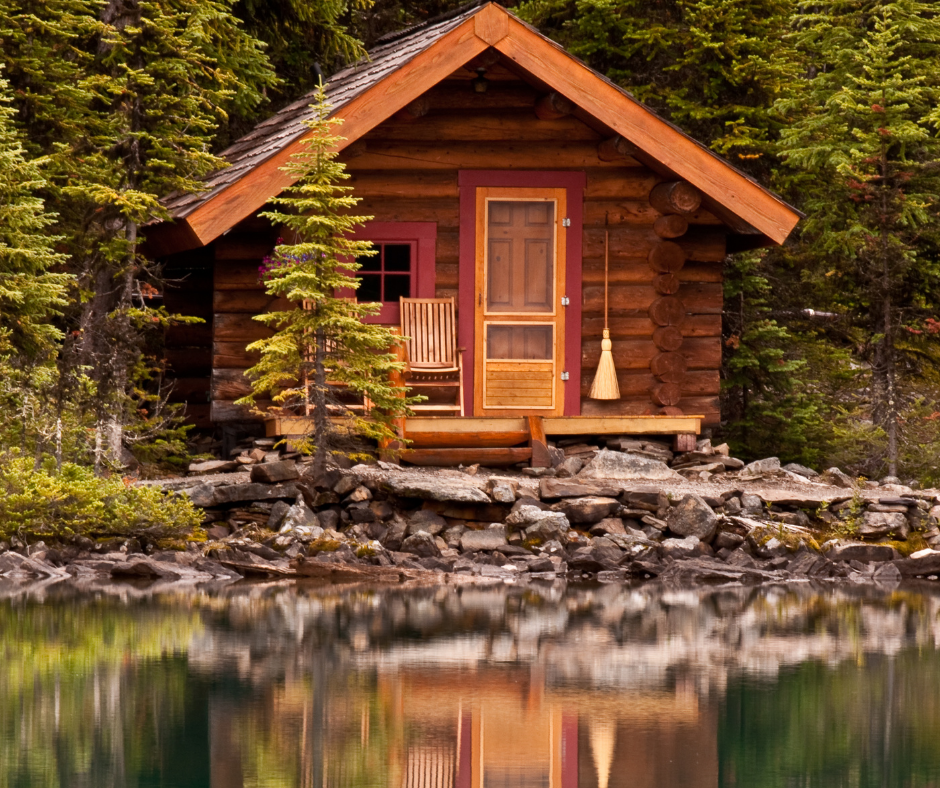
The very least you can do in your life is figure out what you hope for. And the most you can do is live inside that hope. Not admire it from a distance but live right in it under its roof…Right now I am living in that hope, running down its hallway and touching the walls on both sides.
—Animal Dreams, Barbara Kingsolver
Urging us to make our hope into a house and telling us to “live right under its roof”, Kingsolver does multiple things at once. Embedded in her metaphor is a call to define hope clearly and form it into walls and a roof so that it becomes inhabitable. There is a sense, that once you are inside, you will not be directly exposed to the daily elements—the stormy buffeting, and ever-changing, catastrophic events of the moment. Inside your house of hope, you can view them from the window with real concern but you are protected from become overwhelmed by the intensity.
Mountains and Anchors
Hope described this way reminds me of an idea in the book Into the Silent Land by Villanova Professor and Augustinian priest, Father Martin Laird. While writing about contemplation, Laird asks you to imagine yourself a mountain and all that you hear that disturbs you as weather circling the mountain like clouds but not changing your fundamental shape.
Yet another metaphor for hope is an anchor. There are many different explanations for the metaphor, but one says the symbol evokes the relief of safe passage through the sea, dropping the anchor and entering a new land laden with fresh adventures and possibility. Hope here anchors you safely so you can freely experience opportunities.
All three metaphors are solid and strong. They make hope something that grounds you despite what is going on all around you. Ironically, this can make you more compassionate as you can serve others from this place of stability, not panic.
Finding Hope Even When if Feels Impossible
In this moment of pandemic, racial trauma, political divisiveness, environmental surging and deep weariness, it is sometimes hard to think about hope. It seems like enough just to keep your head above the water, but to develop and then dwell within hope seems like too big an ask.
Yet I would argue with, Kingsolver, that it is vital. Just simply asking yourself today, what are you hoping for? And how can you build it, ever so solidly into something like a house, that you can live in? Could you then, welcome other people into your hope, with hospitality? I cannot wait for the day when I can welcome people into my actual house again without fear. Perhaps as an in between step, I can share aspects of what I am hoping for, what I am building within as a shelter for this difficult moment.